
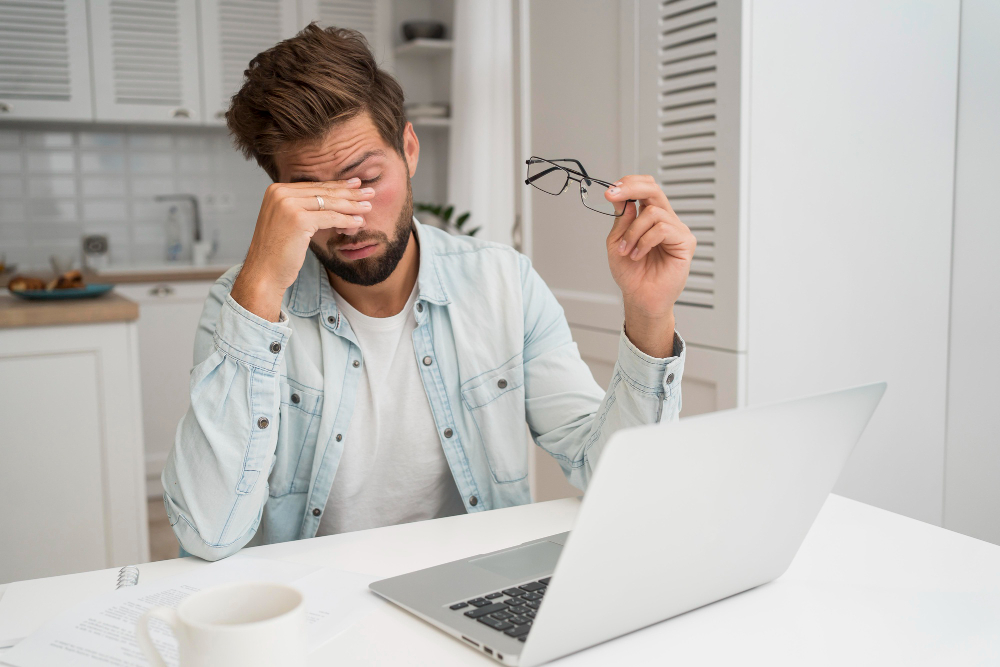
What Is Eye Strain from Gadgets?
Many people spend hours each day using phones, tablets, and computers. Because of this, managing eye strain from gadgets has become very important. Eye strain happens when your eyes get tired from looking at screens for too long. This is also called digital eye strain or computer vision syndrome. According to the American Optometric Association, digital eye strain is now common in both adults and children.
Common Symptoms of Digital Eye Strain
It is important to know the signs of digital eye strain. Early action can help prevent more serious problems. Some common symptoms include:
If you notice these symptoms after using gadgets, you may be experiencing digital eye strain.
Main Causes of Eye Strain from Gadget Use
Many factors can cause eye strain, but gadget use is a leading reason today. Here are the main causes:
According to the CDC, people often blink less when using screens, which can make eyes feel dry and tired.
Simple, Actionable Prevention Steps
Thankfully, you can prevent digital eye strain with a few easy steps. Try these tips to reduce eye fatigue from screens:
These eye strain relief tips are easy to follow and can make a big difference.
Lifestyle Tips for Reducing Eye Strain
Besides changing how you use gadgets, healthy habits can help prevent digital eye strain. For example, you can:
In addition, spending time outdoors can help relax your eyes and reduce fatigue.
When to Seek Professional Help
Most cases of eye strain from gadgets can be managed at home. However, you should see an eye care specialist if:
Early treatment can prevent more serious problems. The World Health Organization recommends regular eye check-ups, especially if you use screens often.
Conclusion
In summary, managing eye strain from gadgets is simple with the right steps. By following prevention tips and making healthy lifestyle choices, you can protect your eyes. If symptoms continue, consult an eye care specialist for personalized advice on managing eye strain.